Tree Removal in Kenosha, WI — Residential & Commercial Removal & Cleanup
Dead, leaning, and hazardous trees come down and get hauled away the same visit — quoted on-site before a saw starts.
Kenosha Premier Tree Services is your local resource for tree removal throughout Kenosha County and southeastern Wisconsin, connecting homeowners and businesses with the tree care professionals who do the work. Most calls fall into one of two buckets: a tree that's already down or clearly on its way there — split trunk, exposed roots, a lean that's worse than it was last fall — or a tree that's simply in the way of a fence line, a driveway extension, or a new build. Both get the same on-site look before anything is quoted, whether the job is a single backyard maple in Kenosha or a wind-exposed row of pines near the Pleasant Prairie lakefront.
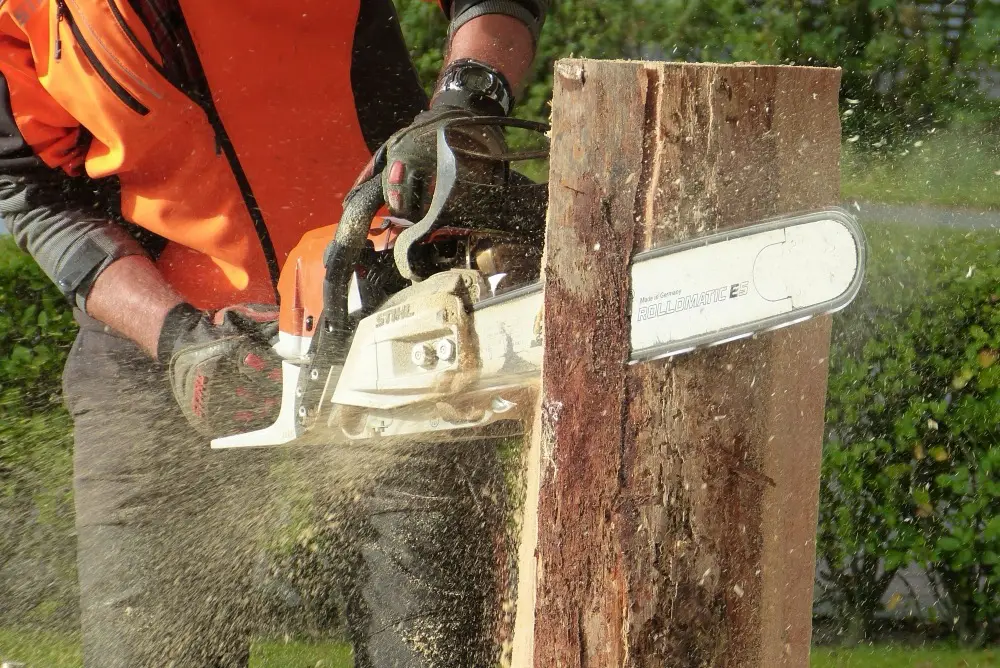
A full removal means the tree comes down in sections, gets hauled off, and the stump is left flush-cut unless grinding gets added to the same quote. Jobs that need a crane instead of ropes and ladders, or that are closer to clearing a lot than taking down a single tree, get scoped separately. Storm-damaged and hazard trees that need a faster response than a scheduled removal move to the front of the line instead of waiting behind routine work.
Every Removal Includes Cleanup, Not Just the Cut
The tree care professionals we work with handle removals across Kenosha County & Southeastern Wisconsin every week. Here’s what’s in the quote every time.
- Full assessment of the tree and its lean before any cutting starts
- Roped, sectional cutting in tight yards — nothing dropped whole unless there's room for it
- Stump left flush-cut at ground level unless grinding is added to the quote
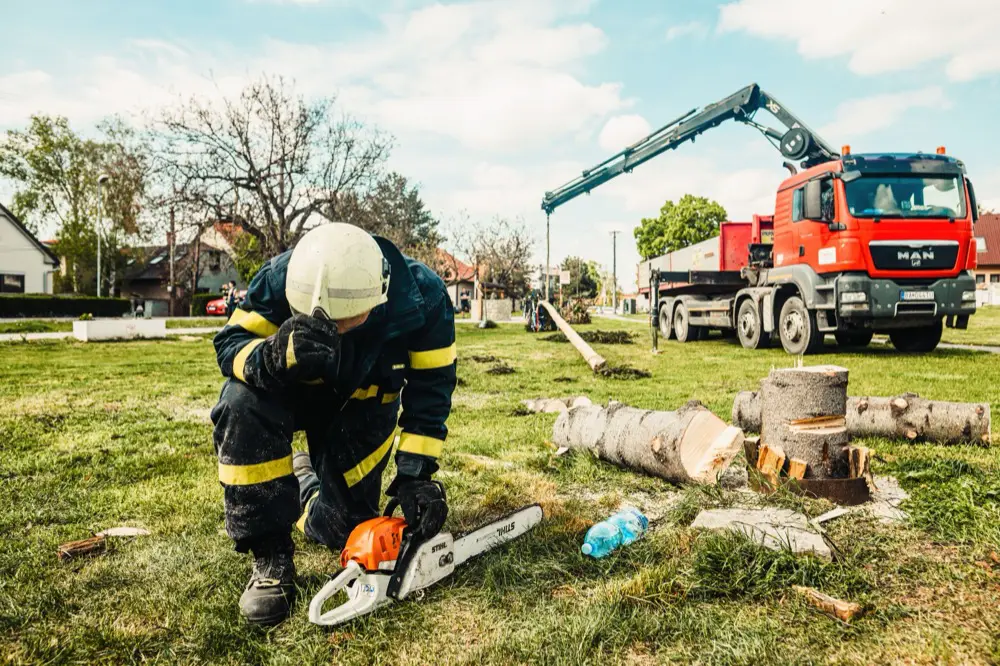
- Branches chipped and trunk sections hauled off-site
- Yard raked and blown clean before the crew leaves
How a Tree Actually Comes Down
A crew lead picks the technique the tree and the yard actually need, not a one-size approach.
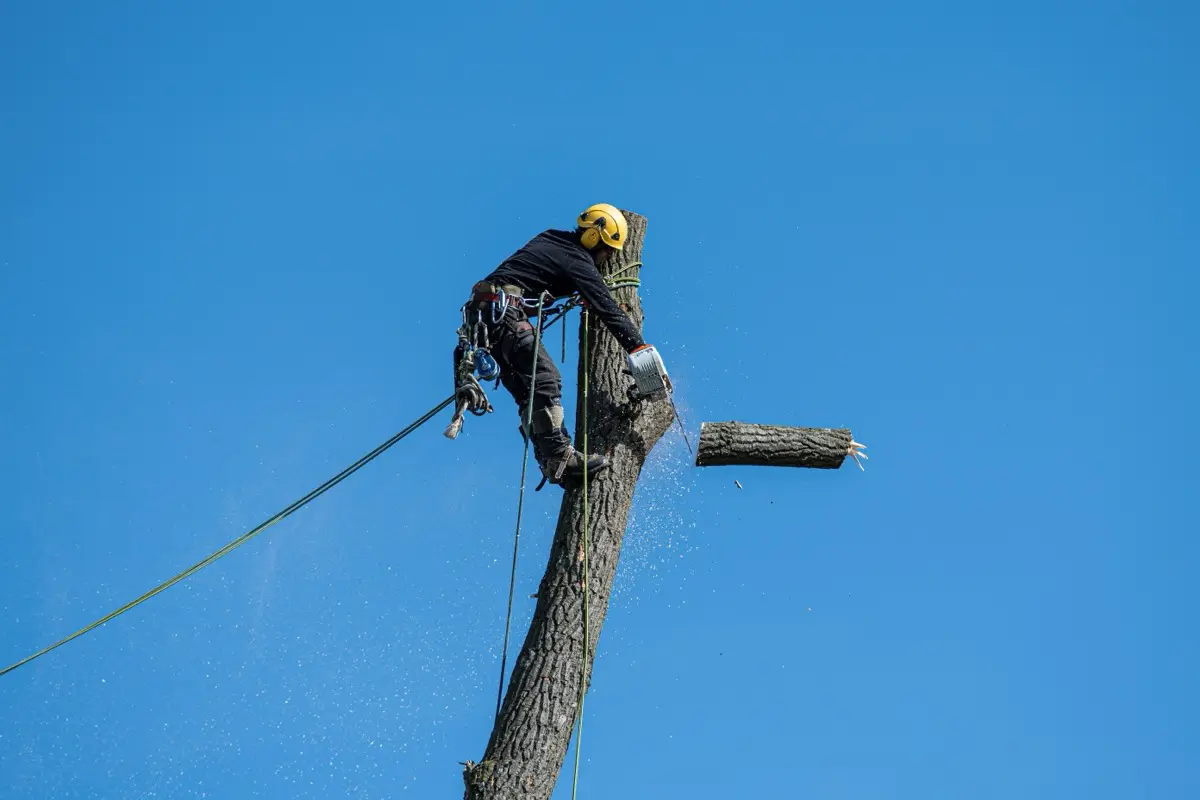
Roped & Sectional Removal
The default technique for tight yards — the tree comes down in ropes and sections instead of one uncontrolled drop, with a crew member guiding each piece to a clear spot on the ground.
Crane-Assisted Removal
Called in when a tree is too tall, too unstable, or too close to a structure for roped cutting alone. A crane lifts and sets each section down in a controlled spot instead of lowering it by hand.
Hazard Removal
For a tree already on a structure, a vehicle, or blocking a driveway, the risk gets assessed and the tree comes down with whatever rigging the situation actually needs — quoted the same as any other job.
Stump Handling
Every removal leaves the stump flush-cut at ground level by default. Full grinding — or a complete pull for anything being built on that exact spot — gets added as its own line on the same quote.
Signs You Need Tree Removal, Not Just a Trim
A tree doesn’t have to be fully dead to be a risk. These are the signs a crew lead looks for on-site.
How a Removal Actually Goes
- 1
Call or request a quote
A crew lead comes out for a free, on-site estimate before anything gets quoted. That means actually standing under the tree — checking the direction and severity of the lean, looking for trunk cracks, cavities, or a hollow sound that signals internal decay, checking the base for root heave or fungus that points to root rot, and sighting the fall zone against the house, garage, fence, and any power lines nearby. Equipment access gets checked too: whether a truck can back into the yard or everything has to be carried out by hand changes both the technique and the price. A phone description or a photo can't catch most of this — a tree that reads as an easy removal from the street sometimes needs a crane once someone's standing at the base, and the reverse happens just as often.
- 2
One price, up front
The quote covers cutting, hauling, and cleanup as one number — not a base removal price with hauling, stump handling, or cleanup billed separately afterward. Height and trunk diameter, distance from the house or a power line, and equipment access are what actually move the number; a straightforward backyard maple costs less than a leaning oak three feet from a garage roofline. Whether the stump comes out is priced as its own line, since plenty of homeowners want it left flush-cut rather than pay for grinding. Nothing gets added once the crew is already on site — if the trunk turns out to be hollower than it looked from outside, that gets discussed before continuing, not tacked onto the invoice after the fact.
- 3
Removal day
The tree is roped and cut in sections, not felled whole — in most residential yards there isn't clearance for a straight drop, so a climber or bucket works the canopy down piece by piece, each section lowered by rope to a spot the ground crew has already cleared. Work generally starts with the smaller limbs and works down to the main trunk, which gets bucked into manageable rounds as it comes down. Tell the crew up front if you want the trunk bucked and left for firewood — otherwise it all goes. For a tree that's too tall, too unstable, or too close to a structure for roped cutting alone, a crane gets brought in instead; that call gets made during the estimate, not improvised mid-job.
- 4
Cleanup
Branches are chipped on-site rather than left in a pile, trunk sections hauled to the truck, and the yard raked and blown clean of sawdust, bark, and small debris before the crew leaves. The drop zone gets a final check for anything that could catch a mower or a bare foot later. If stump grinding was added to the job, that happens as part of the same visit rather than a separate trip; otherwise the stump is left flush-cut at ground level. The crew lead does a final walk of the property before packing up, confirming the site's in the same condition it was found in — minus the tree.
What Does Tree Removal Cost in Kenosha, WI?
- Tree height and trunk diameter
- Distance from the house, fence, shed, or power line
- Equipment access — whether a truck can reach it or everything comes out by hand
- Whether the stump comes out too (stump grinding is quoted as its own line)
A quote from a truck with no company name on it isn’t actually free — worth confirming a real business name before anything starts, not just taking the lowest number over the phone.
A Removal Gone Wrong Takes More Than the Tree
A rushed cut can take the fence, the deck, or the roof along with it — here’s what actually keeps that from happening.
Assessed On-Site, Not by Phone
A crew lead looks at the lean, the trunk, and what's underneath before pricing anything — not a guess made from the curb.
One Price Covers the Whole Job
Cutting, hauling, and cleanup are all in the same quote. Nothing gets added once the crew is already on site.
Roped & Sectional in Tight Yards
Nothing gets dropped in one piece unless there's actually room for it — fences, decks, and sheds stay standing.
Walk the Property Before They Leave
The crew lead walks the yard with you after cleanup — not just a truck pulling away once the tree's down.
Every Property Gets the Same Careful Cut
Residential
A hazard tree near the house is a tighter job than one out in an open yard — every cut gets planned around the fence, the deck, or the roofline before the saw starts, not worked out on the fly once the tree's already coming down.
Commercial
A dead or leaning tree on a commercial lot is a liability question before it's a landscaping one. Work gets scheduled around business hours and billed against a purchase order or net-30 invoice, not a handshake.
Tree Removal Throughout the Coverage Area
Free estimates and the same removal standards, whichever city the job is in.
When Tree Removal Isn’t the Right Call
Jobs that aren’t a fit get turned down instead of quoted anyway.
- A few dead branches high in an otherwise healthy tree — that's a trim, not a removal.
- Properties outside Kenosha County & southeastern Wisconsin — outside the range the professionals we work with can keep response times honest for.
- Anyone just shopping for the cheapest truck that shows up. A truck with no business name on it can always underbid, and that's not a competition worth entering.
Need pruning instead of a full removal? See tree trimming & pruning or browse the full service list.
Frequently Asked Questions
- How much does tree removal cost in Kenosha?
- It depends on the tree's height, trunk diameter, how close it is to a structure, and whether equipment can reach it. It's quoted on-site for free, and that quote is the final price — nothing added once the crew arrives.
- Do I need a permit to remove a tree in Kenosha?
- Most residential removals on private property don't need one. Trees in the public right-of-way or near a shared property line sometimes do — worth a quick call to the City of Kenosha's building inspection department before anything comes down.
- How long does a tree removal take?
- Most residential jobs wrap in a single day, including cleanup. Larger trees, tight access, or multiple trees on one property can push it into a second day.
- Will removal damage my lawn or driveway?
- Roped, sectional cutting keeps pieces off the grass and hardscape in tight yards. Plywood goes down under equipment on soft lawn when needed.
- What happens to the stump?
- It's left flush-cut at ground level unless stump grinding is added to the job. That's quoted separately so you're only paying for what you actually want gone.
Learn More
- City of Kenosha — permit and public right-of-way questions.
- Wisconsin DNR — urban forestry and tree health resources.
- UW-Madison Division of Extension — species and care guidance for Wisconsin yards.
Ready to Get the Tree Down?
Tell us what’s going on and get an immediate on-site quote — no charge for the estimate, and no obligation to book it.
Get My Free Estimate